Part of a series of bulletins from the BAS excavations at Wickham House
Follow the project on our YouTube channel
Attendees: Julian, Geoff, Paula, Michael, Merrill, Gordon, Tony, Tim H, Simon, Eric, Nigel S, Gill, Lindsey and Keith
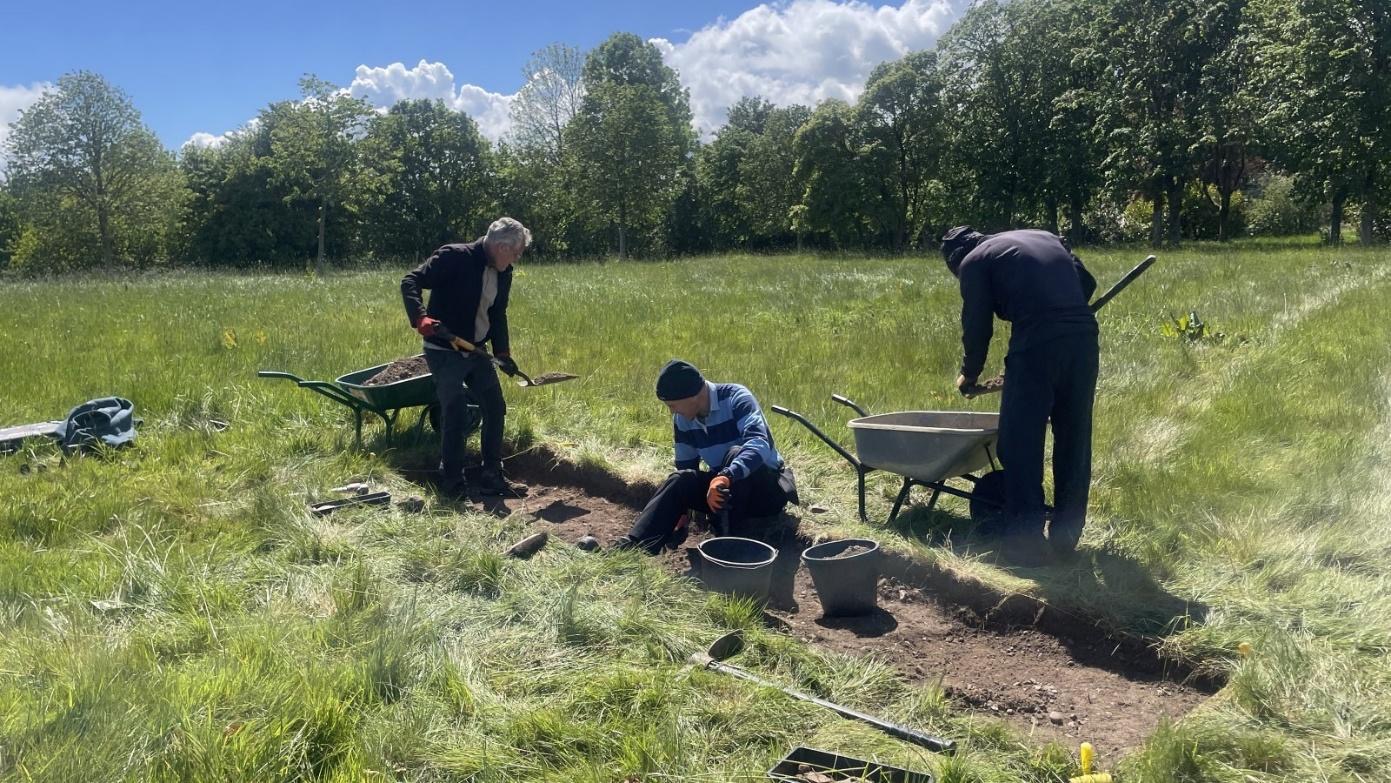
The weather today was a bit “hit and miss” with alternating bright sunshine/heavy rain showers, however today’s team of volunteers made excellent progress. In Trench 15 Paula, Nigel S, Michael and Simon continued to make progress in cleaning the surface revealed the previous week and identifying the different contexts that define the lane branching north from Ermin Street, the ditch along the road (and lane) and the occupation area in the northeast of the trench. By the afternoon Michael had already started planning and recording, and tomorrow the other two areas should also be ready to record their newly revealed contexts.
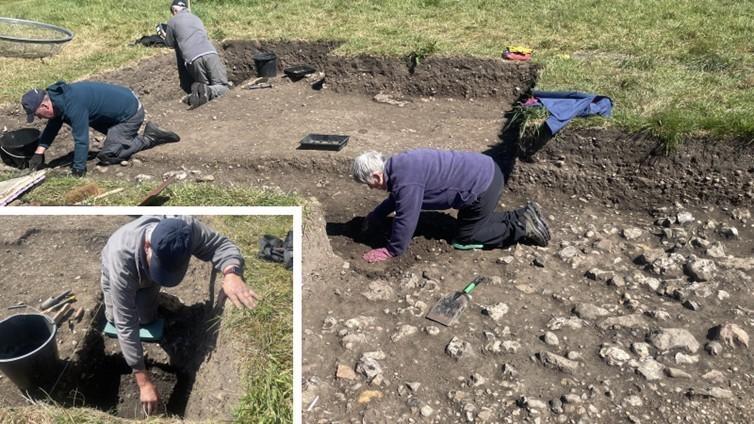
In Trench16 Lindsey and Gill continued the section recording started the day before by Jill, whilst Merrill, Gordon, Geoff and Eric continued to remove the layer of cobbles on top of the large flints thought to define the eastern masonry wall of the corn drier/malting shed. However, what was revealed was a second circular deposit of burnt material the same size as the furnace pit already revealed 2m to the west – and further deposit of chalk similar to that seen between the flint walls of the flue 2m to the west. This could suggest that a number of corn driers/malting sheds were built on this site over an extended period of time with the same morphology? Once this new surface has been recorded, further work will be required to unpick these possibly separate structures and identify their chronologies…
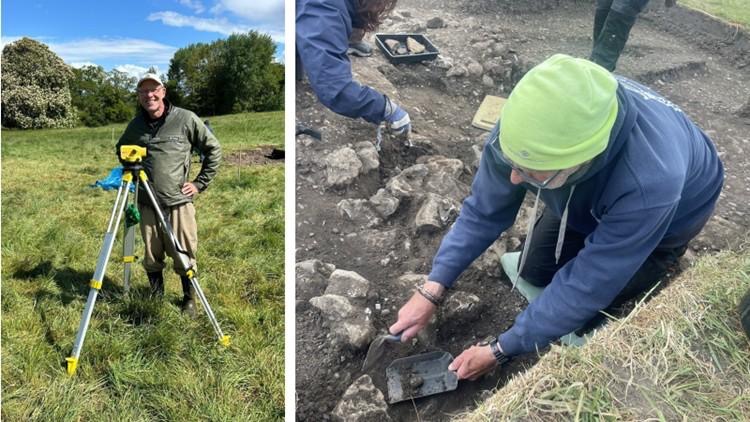
A small ammounrt of recording was done in Trench 17 first thing in the morning to bring trench records up to date, then the team refocussed on opening a new trench (Trench 18) across what we expect to be the ditch along the southwest facing side of Ermin Street and a linear high resistance feature seen on last season’s earth resistance geophysics survey aligned with the Roman road. Turves were removed and by the end of the day the tops of large flints had started to appear where the high earth resistance linear feature was thought to be located. So far, so good – but more work will be needed to define the features in this trench that aims to assess the extent that occupation on the south side of the Roman road was different to that seen on the north side of the road.
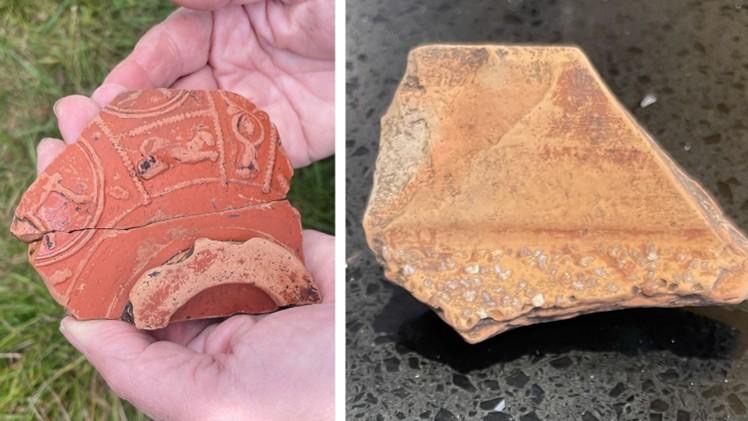
After yesterday’s’ exciting coin find, the top discoveries today were pottery. In trench 16 Gordon discovered this large fragment of decorated pottery with relief decoration with a red slip, possibly manufactured in Oxfordshire. It is hoped that the distinctive pattern and fabric will enable our pottery specialists to identify a date as well as the place of manufacture. In Trench 15, Simon discovered a piece of mortaria (only the 5th fragment of mortaria found on this site to date) that also has a similar red slip and pale orange fabric – and may also have been manufactured in Oxfordshire.