
Part of a series of bulletins from the BAS excavations at Wickham House
Follow the project on our YouTube channel
Attendees: Stuart, Julian, Lindsey, Philip, Doug, Nigel B, James P, Martin, Debbie, Carol, Phil U, Jill, Nick, Rod, Tim H and Keith
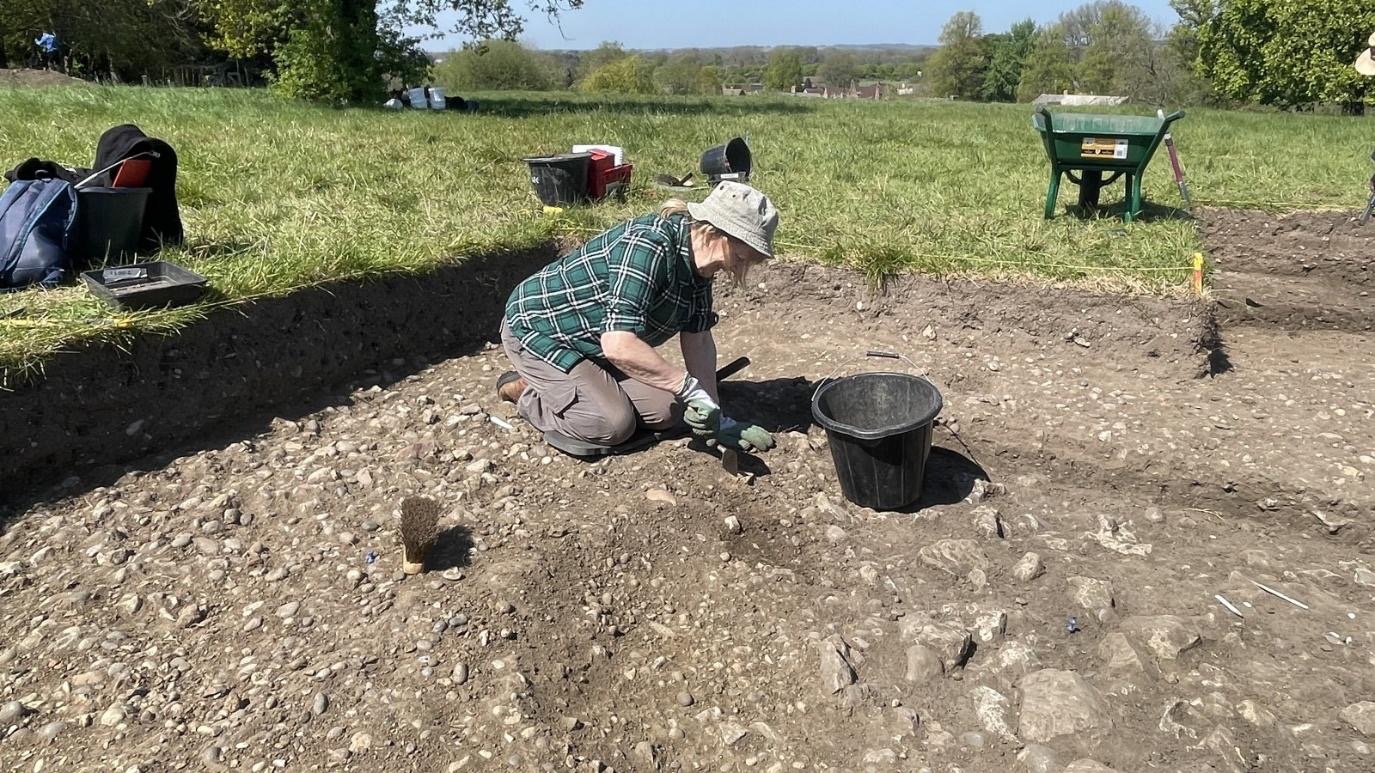
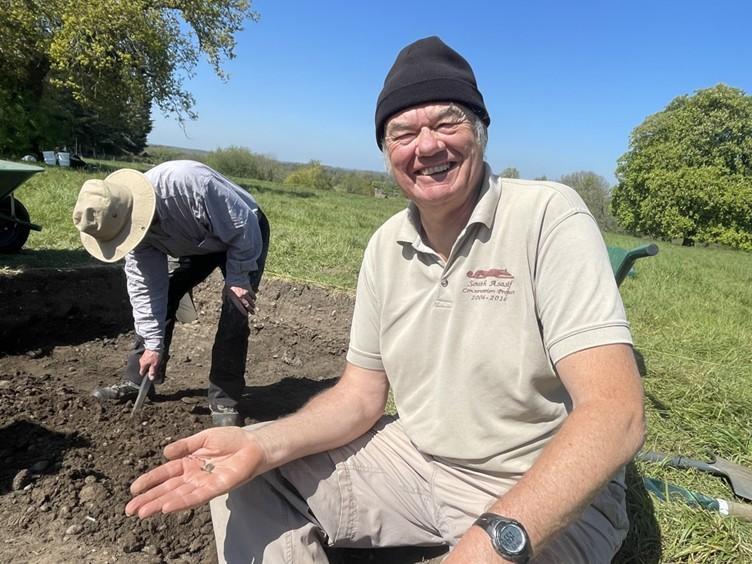
In Trench 15 Debbie, James P and Martin put in a huge amount of work, with Debbie patiently building on the work started the previous week to define the intersection of the Roman road with the lane branching to the north. By the end of the day the delineation between the two surfaces had been defined, with a clear interruption of the roadside ditch filled with building rubble seen to the southeast as seen in Figure 1. Nearby also in Trench 15, Martin and James P removed a significant amount of overburden in a quest to locate the surface of the lane to the northeast of where Debbie was working. By the end of the day this had been accomplished, and they were rewarded with the discovery of a (possibly “barbarous”) copper-alloy numus coin as seen in Figure 2. Having defined the Roman road/ditch and the lane, work will continue next week to determine if the lane ditch seen in 2025 extends to the south – and then to locate the horizon of occupation for the building discovered in this area in 2025…
In Trench 16 Stuart and Lindsey carried on with the first of the projects in this area to excavate a slot across a dark deposit discovered at the south end of the masonry wall. Their objective was to see if this was an area of burning that might suggest that the masonry structure was part of a corn drier or furnace. By the end of the day it was clear that this deposit was shallow, and further areas of chalk and large flints were discovered beneath – however work will continue in this area early next week to explore the newly revealed contexts in more detail…
Elsewhere in Trench 16 Tim H and Rod, and Susan, Phil U, Doug and Carol worked on opening up two new areas to investigate features as yet only partially revealed. Both areas were down to the archaeological horizon by the end of the day with many finds being discovered, mostly from the Roman period.
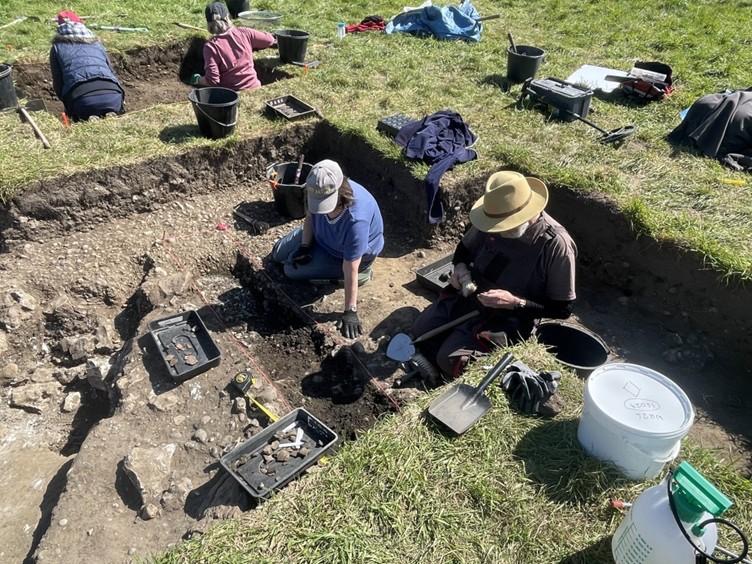
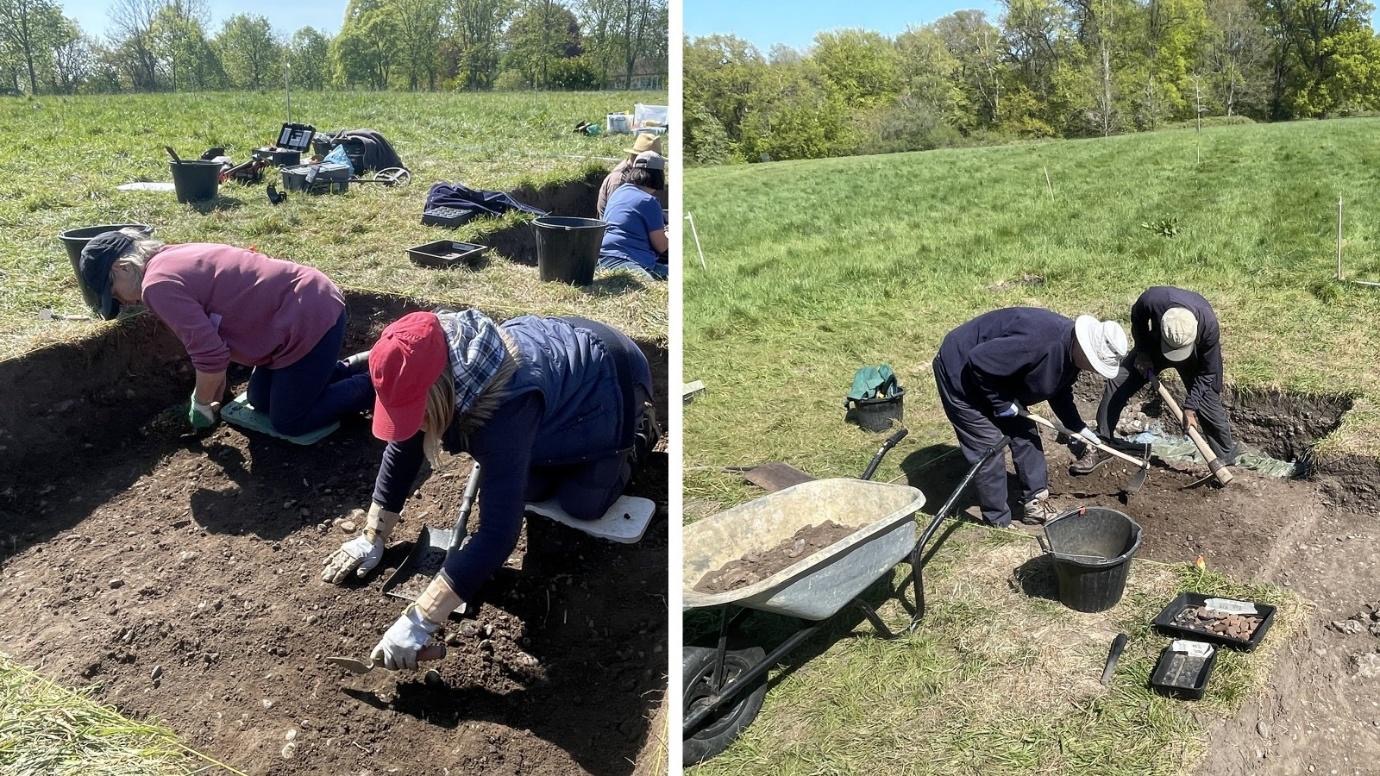
In Trench 17 Nick and Julian were excavating two contexts of “dark earth” rich in Roman period pottery and bone deposits as seen in Figure 5. So far the large flints seen in the trench appear to be placed directly onto the “dark earth”, whereas the Ground Penetrating Radar is predicting a rectilinear feature some 0.2m beneath the current limit of excavation… Work next week will hopefully reveal the archaeology and hopefully correlate with the geophysics anomaly identified in this location.
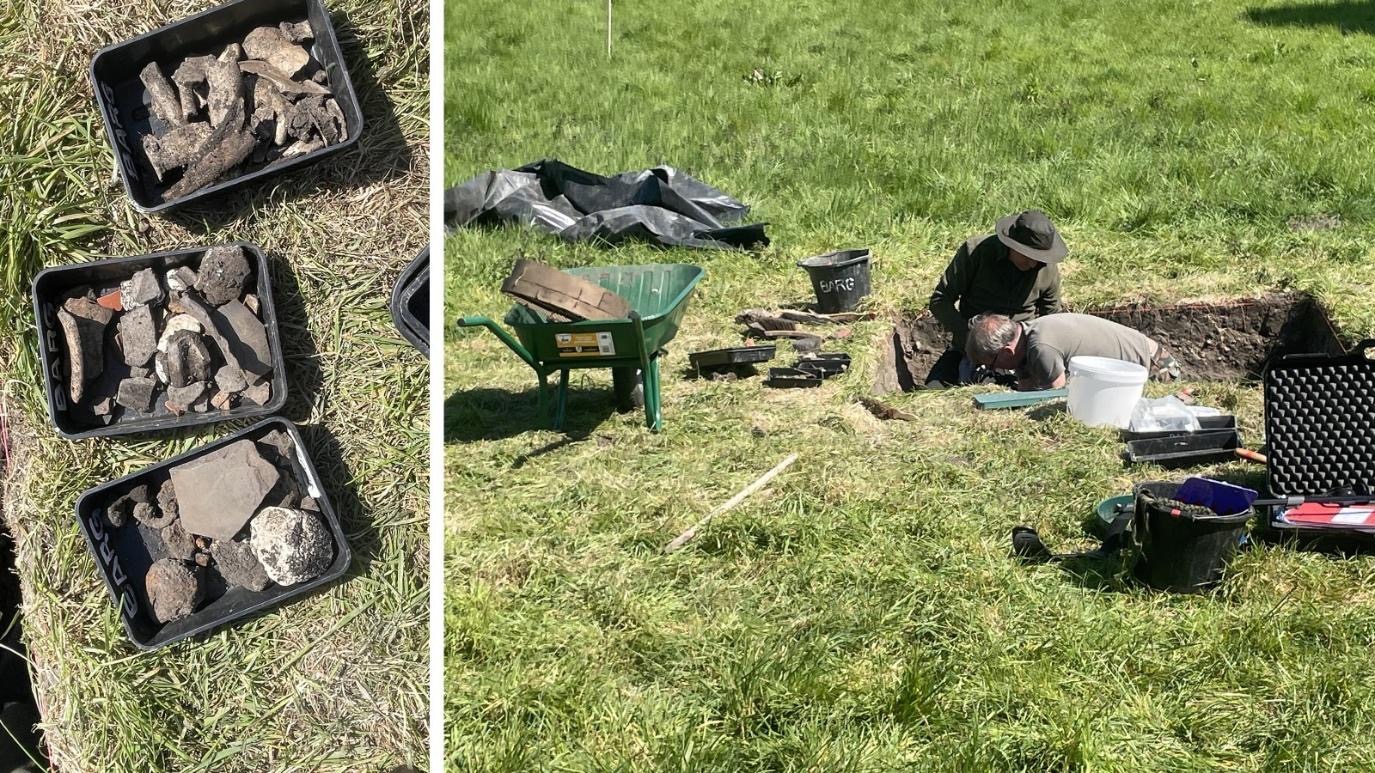

At the end of week #4 of the excavation the size of the spoil heap in Figure 6 speaks of the progress made so far in each of the three trenches opened, and the research objectives for this season’s excavation are already being addressed. The earth resistance survey to the southeast of the excavation also continues to make great progress as shown in Figure 7, where Philip, Nigel B, Geoff and Jill added a further 11 squares to the survey grid. So far rectilinear features can be seen on both sides of the Roman road adding considerably to our knowledge of the extent and morphology of this roadside settlement.

Not only is work continuing apace in the three trenches and the geophysics survey, but our trusty team of volunteers from Marcham have started work cleaning and sorting the finds made in the first four weeks of excavation. This team have many years of experience of post-excavation analysis of the Roman settlement at Frilsham, so it is a privilege to have them working with us (albeit remotely) on the excavation at Wickham. Figure 8 shows Sheila, Ricky, Carol, Simon and Murray hard at work cleaning and sorting our finds, and Figure 9 shows a number of the finds made to date post cleaning. The team will be sorting finds by context/type ready for post-excavation analysis to begin in earnest later in the year…

