
Part of a series of bulletins from the BAS excavations at Wickham House
Follow the project on our YouTube channel
Attendees: Stuart, Julian, Thalia, Millie, Ben, Kira, Jean, Jill, Malcolm, Geoff, Carrollanne, Lindsey, Philip, Phil C, Martin, Debbie C, Jill, Tim L, Tim H and Keith
In Trench 15 work again focussed on removing topsoil from the north end of the trench to reveal the occupation surfaces west of the lane. The mattocking/wheelbarrowing proved a useful means of keeping warm in the strong northerly wind! Keith and Martin updated the plans and context sheets so that the trench records were up to date, and Carrollanne discovered a beautiful Roman melon bead AND part of a Roman copper-alloy nail cleaner as seen in Figure 2. Both these finds are amazing – melon beads are particularly associated with military sites as they are believed to have been worn by soldiers as tokens of ‘good luck’. These finds not only emphasis the role of Ermin Street as a military supply route from Silchester to Carleon, but the nail cleaner also speaks to the large number of finds from the local civilian population of Roman Wickham.
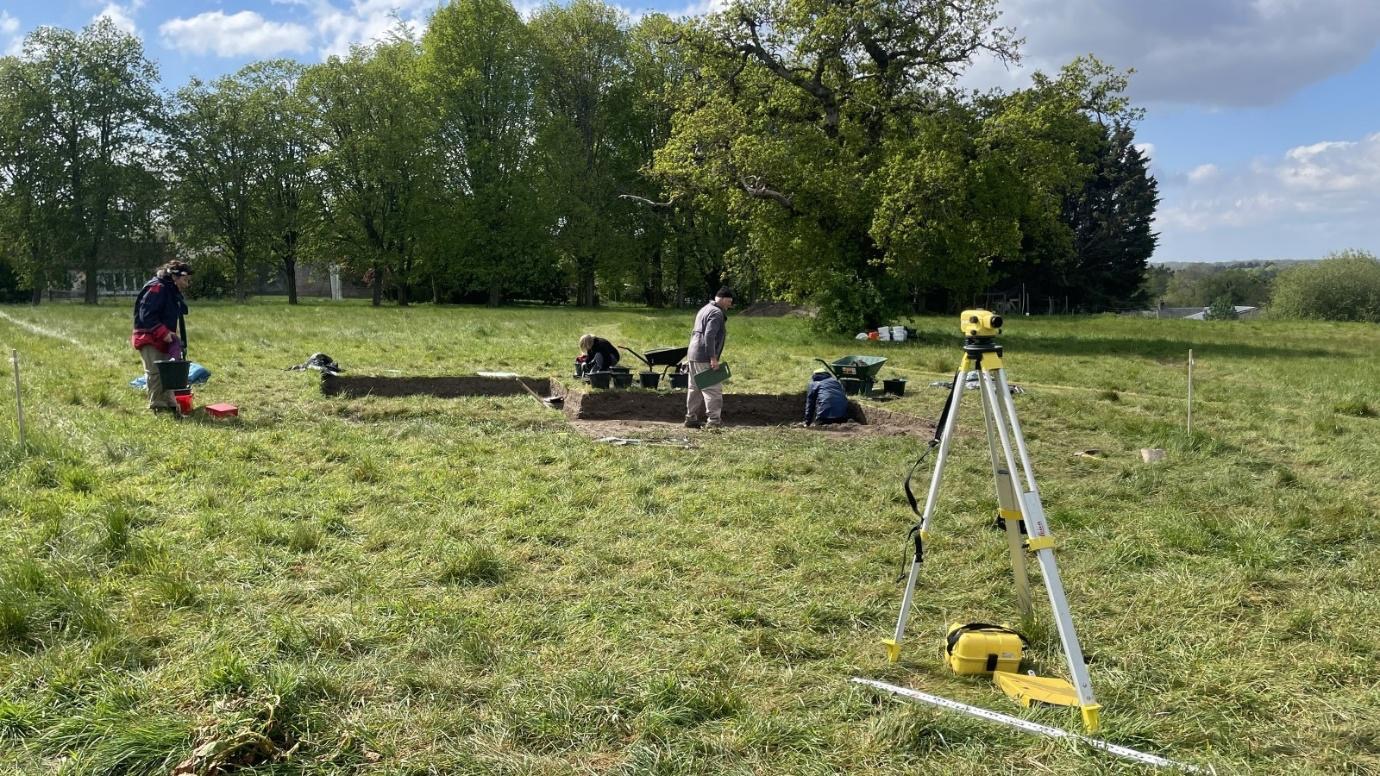

Meanwhile in Trench 16 Stuart and Lindsey continued the excavation of the pit at the southwest end of the masonry wall to investigate if could have been an a area of burning that might indicate a possible industrial function of the masonry wall, however further areas of the chalk mortar were revealed together with Roman colour-coated pottery and a fragment of a shale bracelet – so further work is required to explain this complex series of deposits.
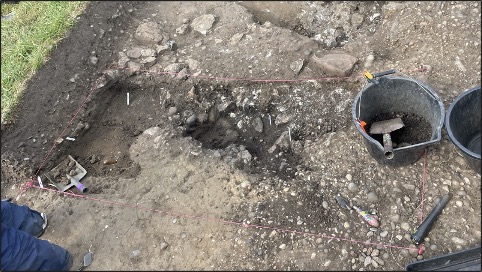
At the north end of Trench 16 Jean and Tim L were looking for features identified on the GPR survey. At the other end of the trench Kira and Ben revealed a new horizon of archaeology that it is also hoped will shed further light on the structures being revealed in this trench…
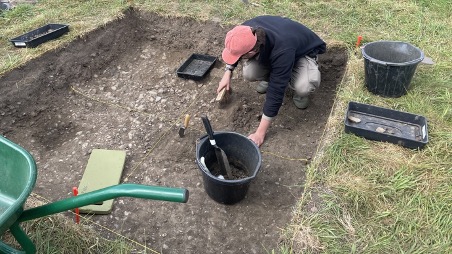
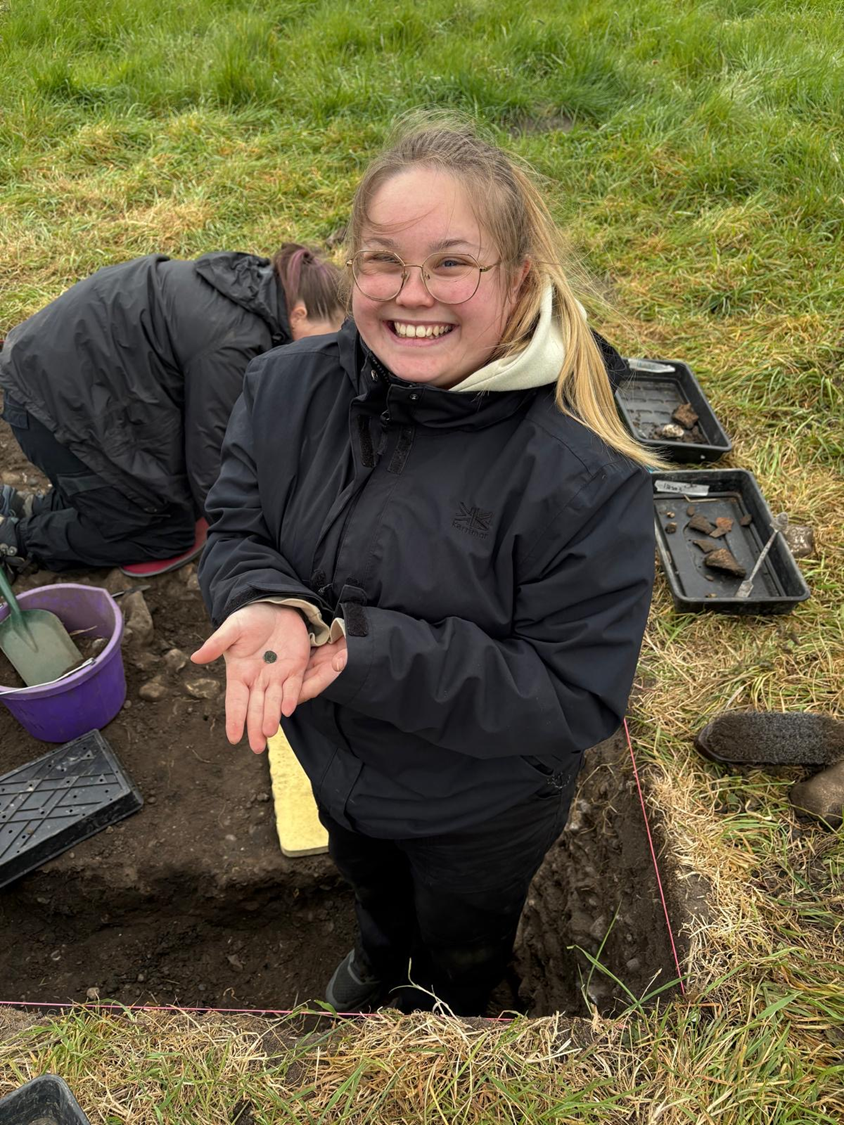
In Trench 17 Millie, Thalia and Julian started to remove the upper layer of the flint deposits revealed last week, that now appears to have been sitting directly on top of the deposits of ‘dark earth’ rich in pottery/bone artefacts seen on the west side of this trench. Work stopped to record, photograph and take levels – and will continue tomorrow to identify archaeological features beneath to assess whether they correlate with the GPR anomaly seen at this depth and location when surveyed at the start of this season’s excavation. Millie also found her first Roman coin in context – an eroded 4th Century AD numus!
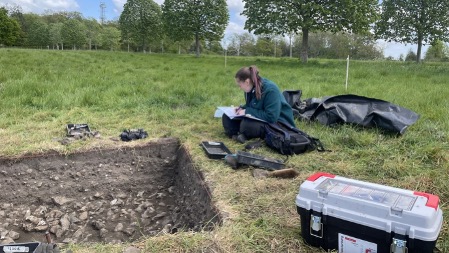

The geophysics phase of the project entered its final week of data collection. Today Philip, Malcolm, Tim H, Phil C and Jill captured an impressive 12 grid squares of data. Today’s results show the Roman road start to fade from view as it heads northwest, but there are further hints of new rectilinear roadside features emerging that will add new insights into the extent and possible functions of this roadside settlement…
